CV Joint Replacement Cost Estimator: Calculate Your Replacement Costs
Use this estimator to calculate the cost of replacing a CV joint based on vehicle type, labor costs, and parts required.
List of the Best CV Joint:

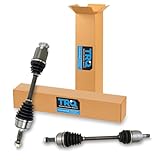


Understanding CV Joint Replacement Costs
The CV joint (constant velocity joint) is an essential part of your vehicle's drivetrain that transfers torque from the engine to the wheels while allowing for the suspension's up-and-down motion. Over time, CV joints can wear out and may need to be replaced. Replacing a CV joint is a labor-intensive job, and the cost varies based on vehicle type and repair complexity. The figures in this guide are planning ranges, not quotes — and one decision matters most: on many vehicles, replacing the entire axle shaft (half shaft) costs little more than replacing a single joint, and is the more common repair.
Safety First: When to Stop Driving
A CV joint that has failed completely can separate, leaving the vehicle without drive power — or, worse, damaging the transmission, brake lines, or suspension. If you hear loud clunking or grinding during turns, feel strong vibration under acceleration, or see grease spraying from a torn boot, have the vehicle inspected before continuing to drive. A boot that fails and loses grease can destroy the joint within a few hundred miles.
Factors That Affect CV Joint Replacement Costs
Here are the key factors that affect the cost of replacing a CV joint:
1. Vehicle Type
The type of vehicle impacts both parts and labor costs. Trucks, SUVs, and luxury vehicles tend to be more expensive to repair due to the complexity of the systems and parts required. All-wheel-drive and four-wheel-drive vehicles have additional CV joints and axles, which increases the scope of the job.
2. Parts Required
The cost of the CV joint itself can vary. On average, CV joints range from $50 to $400, depending on the make and model of the vehicle. If additional parts like boots or axles need to be replaced, the cost will increase. In practice, many shops recommend replacing the whole half shaft assembly rather than just the joint — it is often more reliable and, on some vehicles, comparable in cost once labor is included.
3. Labor Costs
Labor costs typically range from $50 to $150 per hour, depending on location and the mechanic's rates. Replacing a CV joint usually takes 2 to 6 hours, depending on the complexity of the job and whether additional components need to be removed.
4. Difficulty of Repair
If the CV joint is difficult to access or requires the removal of other components, labor costs may increase. The time required for the repair also plays a significant role in the total cost.
Estimated Costs for CV Joint Replacement
The cost of replacing a CV joint can vary based on the vehicle and repair complexity. Below is an estimated cost breakdown:
- Sedan: $200 - $600
- SUV: $250 - $700
- Truck: $300 - $900
- Luxury Vehicle: $400 - $1,500+
Cost Breakdown for CV Joint Replacement
Here's a more detailed breakdown of the costs:
| Component | Cost Range | Details |
|---|---|---|
| Parts | $50 - $400+ | Cost of CV joint and additional parts like boots or axles |
| Labor | $100 - $900 | Labor costs depend on vehicle type and repair time required |
| Additional Parts | Varies | Additional parts like axle boots or suspension components |
Inner vs. Outer CV Joint
Each half shaft has two joints: the outer joint (at the wheel) and the inner joint (at the transmission). Outer joints fail more often and are usually the source of the classic "clicking while turning" symptom. Inner joints tend to cause vibration or shudder under acceleration. Repair cost differs because access and disassembly vary — but on most vehicles, replacing the complete half shaft handles both joints at once and is the simpler, more durable repair.
Signs You Need a CV Joint Repair
- Clicking or popping during turns: The most common sign of a worn outer CV joint.
- Vibration under acceleration: Often points to an inner joint or a bent shaft.
- Grease on the inside of the wheel: A torn boot is spraying grease.
- Clunking over bumps: Can indicate joint wear or a related suspension issue.
- Vibration that worsens with speed: May overlap with a wheel bearing or tire problem — diagnose before replacing parts.
How to Save on CV Joint Replacement
- Replace boots early: A torn boot caught before the joint dries out can sometimes be re-booted cheaply.
- Compare joint-only vs. half-shaft pricing: Ask the shop to quote both.
- Use quality remanufactured or aftermarket axles: They cost less than OEM and are reliable for most daily drivers.
- Get multiple quotes: Labor hours can vary between shops for the same job.
- Address related maintenance: A failing tire or worn suspension component can mimic or accelerate CV joint wear.
Frequently Asked Questions About CV Joint Replacement
How much does it cost to replace a CV joint?
Most CV joint replacements cost $200–$600 for a sedan and $400–$1,500+ for a luxury vehicle. Trucks and SUVs typically fall between. The final price depends on whether a single joint or the complete half shaft is replaced, and on labor hours for your specific vehicle.
Can I drive with a bad CV joint?
Short distances to a shop may be acceptable if the symptom is mild clicking, but avoid highway driving or hard acceleration. A joint that fails completely can leave you without drive power or damage surrounding components. Loud clunking, grinding, or strong vibration means stop driving and have it inspected.
Should I replace just the joint or the whole axle?
On many vehicles, replacing the complete half shaft is the better choice: it is often comparable in cost once labor is included, and it replaces both joints and the boot at once. Ask the shop to quote both options for your vehicle.
How long does a CV joint replacement take?
Typically 2 to 6 hours. Front-wheel-drive vehicles generally take less time than all-wheel-drive or four-wheel-drive vehicles, which may have additional components to remove.
What happens if a CV boot is torn?
Grease escapes and dirt enters, which rapidly wears the joint. If caught early, the boot can be replaced before the joint fails. Once the joint is clicking, the joint itself usually needs replacement.