Brake Fluid Replacement Cost Estimator: Calculate Your Flush Costs
Get an accurate estimate for your brake fluid replacement by entering your vehicle details below.
List of the Best Brake Fluid:

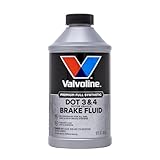


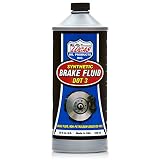
How Much Does a Brake Fluid Flush Cost?
A brake fluid flush typically runs $80–$200 at an independent shop, with most drivers paying $100–$150. A bleed-only (for air removal after a component swap) is $60–$110; a full flush with ABS scan-tool activation on a luxury or European vehicle can reach $250+. The total is driven by three variables: service type (bleed vs flush vs ABS flush), shop rate, and fluid type (DOT 3 vs DOT 4 vs DOT 5.1). This guide gives the breakdown, the DOT-fluid standards, and the ABS-scan requirement that most quotes either include or quietly omit.
Typical Cost by Vehicle Category
| Vehicle category | Bleed only | Full flush | Labor time |
|---|---|---|---|
| Economy / compact | $60–$100 | $80–$150 | 0.5–1 hr |
| Mid-size sedan | $70–$110 | $90–$170 | 0.5–1 hr |
| SUV / crossover | $80–$130 | $100–$190 | 0.75–1.5 hr |
| Truck / large SUV | $90–$150 | $120–$220 | 1–1.5 hr |
| Luxury / performance | $110–$180 | $150–$280+ | 1–2 hr |
Ranges reflect 2024 independent-shop pricing for typical vehicles. Luxury ranges assume ABS scan-tool activation is required (most BMW, Mercedes, Audi, VW, and most 2010+ U.S./Asian vehicles). Source: RepairPal model-level estimates and AAA labor data.
Cost Breakdown
| Component | Share | Typical range |
|---|---|---|
| Labor | 50–70% | $50–$180 |
| Brake fluid | 15–30% | $10–$40 |
| ABS scan-tool activation (if required) | 5–15% | $20–$60 |
| Disposal + shop supplies | 5–10% | $5–$20 |
| Bleeder-screw replacement (if seized) | 3–8% | $10–$40 |
Labor is the dominant share of the bill. Fluid is only $10–$40 because a typical flush uses 1–2 quarts (1–2 liters); SUVs and trucks sometimes need 2+ quarts. Bottles are sold as 500 ml, 1 pint (16 oz), or 1 quart (32 oz) — check the label quantity when comparing "fluid cost."
Labor Rates by Shop Type
| Shop type | Hourly rate | Notes |
|---|---|---|
| Independent shop | $80–$150/hr | Typically the best value for a straightforward flush |
| Dealership | $120–$220/hr | OEM fluid on hand; scan tools guaranteed compatible |
| Chain / franchise (Firestone, Midas) | $100–$180/hr | Coupons common; verify ABS scan is included |
| Mobile mechanic | $90–$150/hr + trip fee | Convenient; confirm the scan tool is on the truck |
Brake Fluid Types — What the DOT Ratings Mean
| Fluid | Cost / quart | Dry boiling point (min) | Wet boiling point (min) | Use |
|---|---|---|---|---|
| DOT 3 | $6–$12 | 401°F (205°C) | 284°F (140°C) | Most passenger cars and light trucks |
| DOT 4 | $10–$20 | 446°F (230°C) | 311°F (155°C) | European vehicles, towing, performance |
| DOT 5.1 | $12–$25 | 500°F (260°C) | 356°F (180°C) | High-performance and ABS-equipped vehicles |
| DOT 5 (silicone) | $20–$40 | 500°F (260°C) | 356°F (180°C) | Classic and show cars only — not for ABS |
DOT ratings are minimums defined by FMVSS 116 (49 CFR 571.116); SAE J1703 / J1704 cover testing. Fresh fluid typically exceeds these minimums, then declines with moisture absorption. DOT 5 (silicone) is incompatible with any ABS system — it cannot be mixed with glycol fluids, and its higher gas content introduces bubbles through the ABS pump — brake failure risk. Use DOT 5 only for non-ABS classic/show cars.
Bleed vs Flush vs ABS Flush — Which Do You Actually Need?
| Service | Cost | What it does | When needed |
|---|---|---|---|
| Bleed only | $60–$110 | Removes air from lines; tops off fluid | After caliper, hose, or master-cylinder replacement; spongy pedal |
| Full flush | $80–$180 | Replaces all old fluid with new | Time/mileage interval reached; fluid dark; moisture > 3% |
| Flush with ABS scan tool | $120–$280+ | Cycles the ABS pump to purge the modulator | Required on most ABS vehicles (nearly all 2000+ European; most 2010+ U.S./Asian) |
On a modern ABS vehicle, a "full flush" that does not cycle the ABS pump leaves old fluid in the modulator — roughly 10–30% of the total volume. The scan-tool step is not a premium option; it is a requirement for a complete service.
Recommended Interval by Manufacturer
| Manufacturer | Typical interval |
|---|---|
| Honda | Every 3 years |
| Toyota / Lexus | Every 3 years or 30,000 miles |
| BMW | Every 2 years (some models annually) |
| Volkswagen / Audi | Every 2 years |
| Ford | Every 3 years or 45,000 miles on many models |
| Subaru | Every 3 years or 30,000 miles |
| General Motors | Often no fixed interval — inspect fluid condition |
"Every 2–3 years" is the common generalization; the specific interval is in your owner's manual. Severe use (towing, track days, mountain driving, humid climates) can require more frequent flushes regardless of the published interval.
DIY Check — Moisture and Copper Test Strips
The most reliable way to know whether a flush is due is a brake-fluid test strip — cheaper and more accurate than eyeballing the reservoir.
- Test strips: $10–$25 at any auto parts store; 3-minute result.
- Moisture above 3% — flush. New fluid is 0–1%.
- Copper above 200 ppm — flush. Copper indicates corrosion of internal lines.
- Visual check: fresh fluid is clear/light amber; dark brown or black means contaminated.
Disposal — Brake Fluid Is Hazardous Waste
Used brake fluid is classified as hazardous waste under the EPA RCRA rules. Do not pour it down the drain, onto soil, or into the trash. Most auto parts stores (AutoZone, O'Reilly, NAPA) accept used brake fluid for free, and most repair shops dispose of it correctly as part of the service. Improper disposal is a fine-able violation.
Warning Signs You Need a Flush
| Symptom | Likely cause |
|---|---|
| Spongy or soft pedal | Moisture or air in the system |
| Dark brown / black fluid | Contamination; overdue flush |
| Pedal sinks toward floor | Fluid leak, worn master cylinder, or degraded fluid |
| Brake warning light | Some vehicles monitor fluid level/quality |
| Longer stopping distance | Reduced hydraulic efficiency |
| Fluid level low with no visible leak | Potential internal leak (master cylinder) |
| Pedal pulsation or ABS light on | ABS pump issue, or contaminated fluid affecting ABS sensors |
How to Reduce the Cost
- Combine with brake pad or rotor service: labor overlaps; many shops bundle at a discount (10–20%).
- Use an independent shop: typically 20–35% below dealership rates.
- Ask about a pressure or vacuum bleeder: faster and often cheaper than manual bleeding.
- Do not buy DOT 5.1 if your vehicle specifies DOT 3: pay for the fluid your manual specifies.
- Watch for chain coupons: brake-service specials sometimes include a free or discounted flush.
- Stay on schedule: a $100 flush now prevents a $600–$1,500 master-cylinder or ABS-modulator repair.
Quick Reference — Cost by Vehicle and Service
| Vehicle | Bleed only | Full flush | ABS flush |
|---|---|---|---|
| Economy / compact | $60–$100 | $80–$150 | $100–$180 |
| Mid-size sedan | $70–$110 | $90–$170 | $120–$210 |
| SUV / crossover | $80–$130 | $100–$190 | $130–$240 |
| Truck / large SUV | $90–$150 | $120–$220 | $150–$270 |
| Luxury / performance | $110–$180 | $150–$280+ | $180–$350+ |
ABS-flush column assumes the scan-tool step adds $20–$60 and may add 0.5 hour of labor. Regional labor rates vary ±10–20%; add 15–20% in metro Northeast/West Coast, subtract 10% in the South.
Related Tools
- Brake pad replacement cost estimator — often done together with a flush
- Brake rotor replacement cost estimator — for a full brake job
- Car repair cost estimator — for the broader repair
- Car battery replacement cost estimator — for other routine maintenance
Frequently Asked Questions (Brake Fluid Replacement)
How long does a brake fluid replacement take?
A bleed-only takes about 30 minutes. A full flush takes 0.5–1.5 hours. An ABS flush adds 0.5 hour for the scan-tool cycle. Extra time comes from seized bleeder screws, rusted lines, or multiple ABS pump cycles on European vehicles.
Do I really need to replace brake fluid?
Yes, on the manufacturer's schedule — typically every 2–3 years or 20,000–45,000 miles. Brake fluid is hygroscopic; moisture lowers its boiling point, which can cause brake fade under heavy braking, and promotes internal corrosion. Test strips ($10–$25) confirm when a flush is due.
Can I replace brake fluid myself?
A straightforward bleed or flush is doable with basic tools and a pressure or vacuum bleeder. But on an ABS vehicle where the scan tool is required, DIY is not recommended — the dedicated scan tools run $200–$1,000+, and a mistake in brake work can be fatal. Used fluid must be disposed of through an auto parts store, not the drain.
How often should brake fluid be replaced?
Follow the owner's manual: Honda and Toyota every 3 years; BMW and VW/Audi every 2 years; Subaru every 3 years/30,000 miles; Ford every 3 years/45,000 miles on many models; GM often has no fixed interval and uses condition-based inspection. Severe use (towing, track, mountains, humid climates) may require more frequent service.
What is the difference between DOT 3, DOT 4, and DOT 5.1?
All three are glycol-based and technically miscible in an emergency, but you should use the type your manual specifies. Minimum boiling points (FMVSS 116): DOT 3 — dry 205°C / wet 140°C; DOT 4 — dry 230°C / wet 155°C; DOT 5.1 — dry 260°C / wet 180°C. DOT 5.1 offers the highest wet boiling point of the glycol family, hence its use in ABS and performance applications.
Can I mix different types of brake fluid?
Never mix DOT 5 (silicone) with DOT 3, DOT 4, or DOT 5.1. Mixing causes seal damage and brake failure. DOT 3, 4, and 5.1 can be mixed in an emergency, but doing so lowers the boiling point. Always use the manufacturer-specified type and flush completely if switching.
What is a brake fluid flush with ABS scan tool?
The scan tool activates the ABS pump and cycles the modulator valves so that old fluid inside the ABS unit is purged. Without it, 10–30% of the old fluid remains in the modulator. Nearly all 2000+ European vehicles and most 2010+ U.S./Asian ABS vehicles require this step. Adds $20–$60 and 0.5 hour of labor.
Will a brake fluid flush make my brakes feel better?
Often yes — a flush restores a firm pedal if the old fluid was moisture-contaminated or had air, and raises the boiling point against fade. It will not fix worn pads or rotors; those require replacement regardless.
How can I extend the life of my brake fluid?
- Never top off with fluid from an already-opened bottle — an open bottle absorbs moisture in ~30 days.
- Do not open the reservoir to "check" the fluid — each opening admits moisture.
- Use fresh, sealed fluid; discard leftover.
- Sealed, unopened brake fluid has a shelf life of about 2 years.
- Keep the master-cylinder cap seated; have the shop inspect the cap seal at each service.
Is this calculator a substitute for a mechanic's quote?
No. It provides a planning estimate from published cost data. Actual prices vary by region, vehicle, and the condition of the system (seized bleeders, rusty lines). Get 3+ itemized quotes, confirm whether the ABS scan tool is included, and verify the correct DOT fluid for your vehicle. Related tools: brake pad replacement cost estimator, brake rotor replacement cost estimator, car repair cost estimator.
Sources and references
- FMVSS 116 — 49 CFR 571.116: Motor Vehicle Brake Fluids
- SAE — J1703 / J1704: Motor Vehicle Brake Fluid
- RepairPal — model-level brake-fluid service cost data
- AAA — Your Driving Costs
- Mitchell 1 / ALLDATA — labor-time guides
- U.S. EPA — RCRA: Managing Used Oil and Hazardous Waste