Alternator Replacement Cost Estimator: Calculate Your Repair Costs
Get an estimate of your alternator replacement costs by entering your vehicle details below.
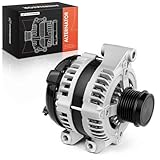
List of the Best Alternator:



How Much Does Alternator Replacement Cost?
A typical alternator replacement runs $400–$800 at an independent shop — parts and labor combined. Sedans on the low end are $300–$550; luxury vehicles or heavy-duty trucks can exceed $1,000. The spread is driven by four variables: vehicle type, part quality (economy rebuilt vs OEM), labor rate by shop type, and regional cost differences. This guide gives the breakdown, the labor-hour guides by model, the parts-quality tiers, and the pre-replacement diagnostics that can save a misdiagnosed repair.
Typical Parts and Labor Breakdown
| Vehicle type | Parts | Labor | Total (typical) |
|---|---|---|---|
| Sedan (compact/mid) | $150–$450 | $150–$300 | $300–$650 |
| SUV (mid-size) | $200–$550 | $200–$350 | $400–$800 |
| Truck (full-size) | $250–$650 | $200–$400 | $450–$950 |
| Luxury (BMW/Mercedes/Audi) | $400–$1,200 | $300–$500 | $700–$1,700 |
Parts ranges reflect the difference between economy rebuilt units and OEM new. Labor ranges assume 1.5–4.0 hours at $80–$150/hr, which covers most passenger vehicles. High-end luxury (Porsche, AMG, certain Audi/BMW variants with tight engine bays) can reach $2,000+. These ranges are consistent with RepairPal's model data — expect your actual quote to fall inside or near them.
Labor Hours by Model — Why "2–4 hours" Is Too Broad
Labor time is set by the manufacturer and varies enormously by engine bay layout. Published labor-time guides (Mitchell 1, ALLDATA) give these typical ranges for a 4-cylinder or V6 alternator swap:
| Model (example) | Labor hours | Notes |
|---|---|---|
| Honda Civic (1.5T / 2.0) | 1.5–2.0 | Easy access from top; serpentine belt removal |
| Toyota Camry (2.5) | 1.5–2.5 | Accessible; some years require intake tube removal |
| Honda Accord (2.4) | 2.0–2.5 | Belt and tensioner removal typical |
| Ford F-150 (5.0 / 3.5 EB) | 2.0–3.5 | Varies by engine; higher for EcoBoost |
| BMW 3-series (N20 / N55) | 3.0–5.0 | Requires removing intake and belt-drive components |
| Mercedes C-class (M274) | 3.0–5.0 | Similar to BMW; some access requires removing splash shields |
| Audi A4 (EA888) | 4.0–6.0 | Some years require bumper carrier removal |
Use the labor-time guide to estimate the labor line on your quote: hours × shop rate. A $150/hr luxury dealer charging 5 hours for a BMW alternator is $750 labor alone — the same job at an independent shop at $110/hr is $550. This is the largest single source of quote variation between shops.
Labor Rates by Shop Type
| Shop type | Hourly rate | Typical advantages |
|---|---|---|
| Dealership | $110–$200 | Factory-trained techs; OEM parts; nationwide warranty |
| Independent shop | $70–$130 | Personal service; competitive rates; can source OEM or aftermarket |
| Chain (Firestone, Midas, etc.) | $90–$150 | Widespread locations; standardized pricing; coupons |
Independent shops typically save 20–40% over dealerships on the same job. That is not a quality difference — it is overhead and warranty policy. Get the warranty terms in writing (parts and labor separately) before choosing.
Regional Cost Variations
| Region | Variance | Typical total | Key driver |
|---|---|---|---|
| Northeast | +15–20% | $450–$950 | Higher labor and operating costs |
| Midwest | Baseline | $400–$800 | National median |
| South | −5 to −10% | $350–$720 | Lower labor rates |
| West Coast (metro) | +25–30% | $500–$1,050 | Labor and regulatory costs |
Parts Quality Tiers — What "Rebuilt" Actually Means
| Tier | Typical price | Warranty | Best for |
|---|---|---|---|
| Economy rebuilt | $100–$200 | 90 days–1 year | Older vehicles, low-mileage use, quick resale |
| Premium rebuilt / reman | $200–$400 | 1–3 years | Most vehicles; Bosch or Denso reman are reliable |
| OEM new | $400–$1,000 | 1–2 years | Newer vehicles, still under warranty, luxury |
| Luxury / high-performance OEM | $800–$1,500+ | 1–2 years (varies) | BMW, Mercedes, Audi, Porsche, AMG; some units $2,500+ |
"Lifetime" warranties on aftermarket units usually mean limited lifetime — covers the original purchaser, not transferable, excludes labor. Read the terms. A premium rebuilt (Bosch, Denso, ACDelco Professional) is often the best value for a vehicle you plan to keep for 3–5 years.
Signs of Alternator Failure
| Sign | What it indicates | Action |
|---|---|---|
| Battery/ALT warning light | Charging system fault | Stop driving when safe; test charging system |
| Dimming headlights / interior lights | Voltage drop under load | Test with multimeter before it strands you |
| Whining or grinding noise | Bearing or diode failure | Professional inspection |
| Burning smell | Winding or diode overheating | Stop driving; alternator may be near failure |
| Frequent battery drain / jumpstarts | Alternator not recharging battery | Test alternator output |
| Voltage gauge below 12 V or fluctuating | Regulator or diode issue | Diagnose immediately |
| Belt squeal that gets worse | Alternator bearing seized (pulley not turning) | Stop driving; belt can break |
Diagnose Before You Replace
A battery light does not automatically mean "replace the alternator." The three-checks sequence below avoids a very common misdiagnosis:
- Multimeter at the battery, engine running: 13.8–14.5 V = alternator is charging; 12.5–12.8 V = alternator not charging; above 15 V = regulator overcharging.
- Load-test the battery: most auto parts stores do this free. A weak battery can mimic an alternator failure — and a failed alternator can drag the battery down.
- Inspect the belt and tensioner: a slipping serpentine belt produces the same "no charge" symptom as a failed alternator, for a fraction of the cost.
Only after all three checks point to the alternator should you replace it. A shop that quotes an alternator replacement without a load test and a belt inspection is not diagnosing — it is guessing.
How Long Can You Drive on a Failing Alternator?
The car will run until the battery is depleted — typically 20–60 minutes with a fully charged battery, depending on the electrical load. Modern vehicles with LED headlights, large infotainment screens, and heated seats can drain faster; older, simpler vehicles drain slower. Do not plan on driving anywhere except to a service location. Once the battery is exhausted, the engine stops — often in a lane of traffic.
Should You Replace the Battery at the Same Time?
- Battery ≥ 4 years old: usually yes. A new alternator working against a failing battery will be stressed and may have a shortened life.
- Battery 2–4 years old: test first (load test). Replace if below 12.4 V at rest or if the test indicates weakness.
- Battery < 2 years old: usually no — if it passes a load test, keep it. The alternator failed; the battery did not.
- Replace both anyway if: the alternator failed by overcharging (battery may be damaged). Check the battery's voltage history.
Getting the Best Value
| Action | Typical savings |
|---|---|
| Get 3+ itemized quotes | 10–20% |
| Choose independent over dealership | 20–40% |
| Schedule proactively (not emergency) | 15–30% |
| Choose premium rebuilt over OEM (if keeping 3–5 years) | 40–60% on parts |
| Check warranty coverage first (powertrain / extended) | Full cost covered |
Maintenance That Prevents Premature Failure
- Test the charging system every 2 years: free at most auto parts stores; catches a weak alternator before it strands you.
- Inspect the serpentine belt every 30,000 miles: a worn or mis-tensioned belt can damage the alternator pulley and bearing.
- Keep the battery terminals clean: corrosion increases resistance, forcing the alternator to work harder.
- Keep the battery healthy: a weak or failing battery stresses the alternator continuously.
- Avoid adding high-draw accessories (large amplifiers, extra lighting) without upgrading the alternator output capacity.
Related Tools
- Car battery replacement cost estimator — battery vs alternator diagnosis
- Serpentine belt replacement cost estimator — belt-related no-charge issues
- Car repair cost estimator — for the broader repair
- Spark plug replacement cost estimator — for related electrical/ignition work
Frequently Asked Questions (Alternator Replacement)
How long does an alternator typically last?
Most alternators last 80,000–150,000 miles (7–10 years) in normal use. High underhood temperatures (turbo vehicles, hot climates), frequent short trips (weak battery keeps the alternator at full output), and heavy electrical loads shorten that. A well-maintained vehicle with a healthy battery often reaches the high end of the range.
Can I drive with a failing alternator?
Only to a service location. The engine runs until the battery is depleted — typically 20–60 minutes with a full battery, less on modern high-load vehicles. Once exhausted, the engine stops with no warning, often in traffic.
How do I know if it's the alternator or the battery?
Test with a multimeter at the battery with the engine running: 13.8–14.5 V means the alternator is charging; 12.5–12.8 V means it is not. Then load-test the battery separately. If the alternator is charging but the car won't crank, the battery is the problem; if the alternator is not charging, the alternator (or belt, or wiring) is the problem. Most auto parts stores perform both tests free.
Should I replace my battery when replacing the alternator?
If the battery is ≥ 4 years old, usually yes — a failing battery stresses the new alternator. If it is 2–4 years old, load-test it first. If under 2 years, keep it unless it fails the test. When the alternator failed by overcharging, the battery may be damaged regardless of age — have it tested.
Are rebuilt alternators a good option?
Yes, when they come from a reputable rebuilder (Bosch, Denso, ACDelco Professional). Rebuilt units typically cost 40–60% less than OEM new and often carry 1–3 year warranties. Quality varies widely at the economy end — for a vehicle you plan to keep, the premium rebuilt tier is the best value-per-year.
What's a "lifetime" warranty on an alternator?
Usually a limited lifetime warranty — covers the original purchaser (non-transferable), covers defects in materials and workmanship, and does not cover labor. Read the written warranty before assuming it means "lasts forever."
How can I extend my alternator's life?
- Keep the battery in good condition (weak battery = constant high alternator output)
- Keep the serpentine belt in good condition and properly tensioned
- Test the charging system every 2 years
- Keep battery terminals clean (corrosion = resistance = heat)
- Avoid overloading the electrical system with aftermarket accessories
Is this calculator a substitute for repair-shop quotes?
No. It provides a planning estimate based on published cost and labor-time data. Actual prices vary by model, region, and the shop's parts source and labor rate. Get 3+ itemized quotes — parts and labor separately, with warranty terms — before committing. Related tools: car battery replacement cost, serpentine belt replacement cost, car repair cost estimator.